
The Komodo Dragon (Varanus komodoensis)
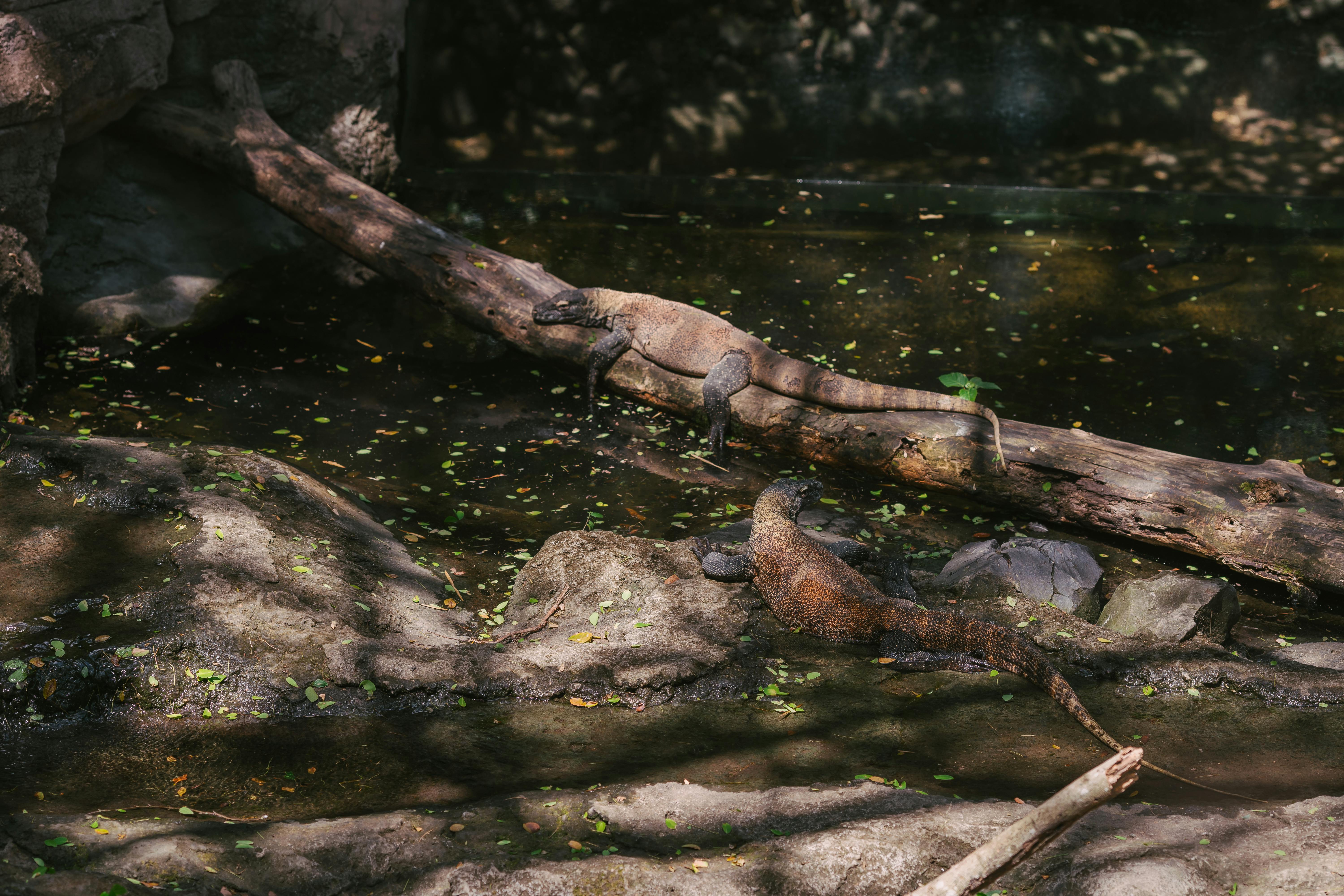
Among reptiles, the Komodo dragon (Varanus komodoensis) is an apex predator native to the Indonesian islands of Komodo, Rinca, Flores, and Gili Motang. These massive lizards can reach lengths of up to 10 feet, weighing over 150 pounds. Their muscular build, combined with a powerful tail and sharp claws, makes them formidable hunters and defenders.
Komodo dragons possess a sturdy body with long tails, strong, agile necks, and robust legs. Komodo dragons have rough, durable skin reinforced with osteoderms (bony plates) protecting them from injuries. They also possess yellow, forked tongues that assist them in detecting odors using their Jacobson’s organ.[1]
Taxonomy
Kingdom: AnimaliaPhylum: Chordata
Class: Reptilia
Order: Squamata
Suborder: Sauria
Family: Varanidae
Genus: Varanus
Species: Varanus komodoensis
Recent studies have found that Komodo dragons possess teeth encased in a protective iron coat, which keeps their serrated edges sharp. This allows them to excel at tearing flesh efficiently.
Komodo dragons possess an excellent sense of smell and utilize it to sniff out carrion miles away through their long, forked tongues. Although primarily scavengers, they are equally capable hunters who consume large mammals such as deer, wild pigs, and even water buffalo. They’re ambush predators, remaining motionless in the underbrush before launching a sudden, explosive attack. With a single devastating bite, they wound their prey and then retreat, waiting for the venom’s effects to take hold. Komodo dragons possess venom glands containing anticoagulant chemicals, preventing blood clotting and inducing shock in their prey. The combination of physical power and biochemical weaponry makes the Komodo dragon one of the most fascinating reptilian predators.
Komodo dragons breed during the dry season (May-August). Males fight for mates, and the winner gets the female. Females lay around 15–30 eggs. The eggs incubate for 7–8 months. Hatchlings are independent but vulnerable. Surprisingly, females can reproduce asexually through a process called “Parthenogenesis”, ensuring survival when males are scarce.
The International Union for Conservation of Nature (IUCN) has classified the Komodo dragon as an endangered species, with an estimated 1,400 mature individuals remaining in the wild. Their populations are declining due to habitat destruction from human expansion, poaching of prey species like deer and wild pigs, climate change, and even rising sea levels which threaten to submerge their island habitats. Protected areas such as Komodo National Park help safeguard their future, but ongoing threats demand stronger action.